
Media Center
Blogs
An ankle injury usually happens in a moment. The foot rolls, twists or lands awkwardly, and the force travels through the joint. Depending on the direction and severity of that force, the result may be a stretched or torn ligament, a broken bone, or both together.
Telling a fracture from a severe sprain is difficult without an examination and an X-ray, because the two produce very similar symptoms in the first hours. That matters, because some fractures that are not identified and treated appropriately may heal in an incorrect position and lead to longer-term problems with pain, walking, stability or joint function.
Many ankle fractures heal well without surgery when the bones are stable and correctly aligned. Others need surgical fixation to restore that alignment. This guide explains how the two are told apart, what the treatment options involve and what recovery realistically looks like.
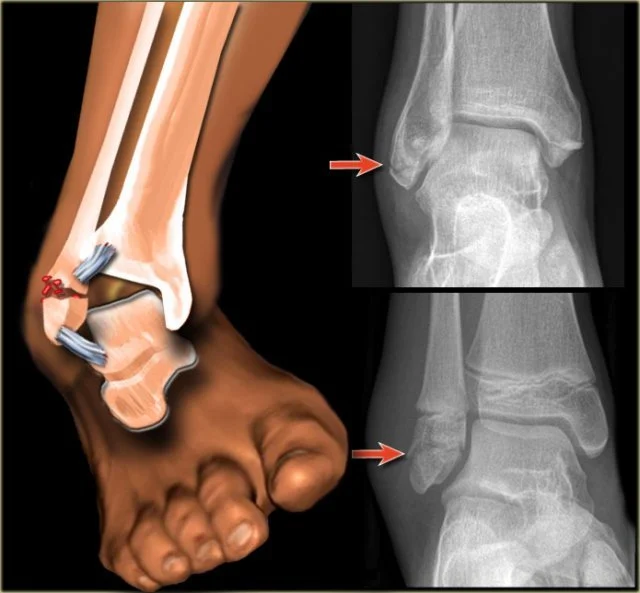
There is no reliable way to confirm a fracture at home. The following signs make one more likely and mean the ankle should be assessed:
Being able to walk does not rule out a fracture. Some fractures, particularly stable ones involving a single bone, still allow limited weight bearing. Some stable fractures still allow limited weight-bearing, so the ability to walk should not be used alone to rule out a fracture. If bony tenderness and significant swelling are present after a twisting injury, get it assessed even if you managed to walk home.
In a fracture, one or more of the bones forming the ankle joint breaks. In a sprain, the ligaments that hold those bones together are stretched or torn while the bones themselves stay intact.
The distinction matters because bone and ligament heal differently and need different management. A severe sprain can be as painful and as swollen as a fracture, and in the first 48 hours the two often look identical.
| Feature | More suggestive of a fracture | More suggestive of a sprain |
|---|---|---|
| Site of tenderness | Directly over the bony points of the ankle | Over the soft tissue below or in front of the bone |
| Weight bearing | May be difficult or impossible | May still be possible, depending on severity |
| Sound at the time | A crack may be heard or felt | A pop is common and does not indicate a break |
| Deformity | May be visible | Usually not present |
| Swelling and bruising | Usually rapid and extensive | Can also be rapid and extensive |
The overlap is the point. Swelling, bruising and severe pain occur in both, and a popping sensation at the moment of injury tells you very little. This is why clinical examination and, where indicated, an X-ray are needed to confirm or exclude a fracture rather than judging by symptoms alone.
The ankle joint is formed by the lower ends of two leg bones, the tibia and the fibula, sitting on top of the talus in the foot. The bony prominences you can feel on each side are called malleoli. Fractures are named by which of these structures is broken.
Two further descriptions determine treatment more than the name of the broken bone.
This is why two people with the same fracture name can be treated differently. A stable, non-displaced lateral malleolus fracture may need only a boot, while a displaced, unstable one may need surgery. Because the ankle is a weight-bearing joint with little tolerance for imperfect alignment, even small degrees of displacement can matter.
Diagnosis begins with the history and examination, which also determine whether imaging is needed at all.
Where imaging is indicated, Radiology and Diagnostic Imaging at Sheikh Sultan bin Zayed Hospital provides:
Not every ankle injury needs advanced imaging, and many need no imaging at all. Clinical assessment determines what is appropriate.
No. A significant proportion of ankle fractures are treated without surgery. Where the fracture is stable and the bones are correctly aligned, immobilisation allows the bone to heal in position.
Surgery is generally considered when:
The goal of surgery is not the operation itself but what it achieves: restoring the normal alignment of the joint and holding it stable while the bone heals. The ankle carries the body’s full weight through a small surface area, so poor joint alignment can increase the risk of persistent symptoms and post-traumatic arthritis over time.
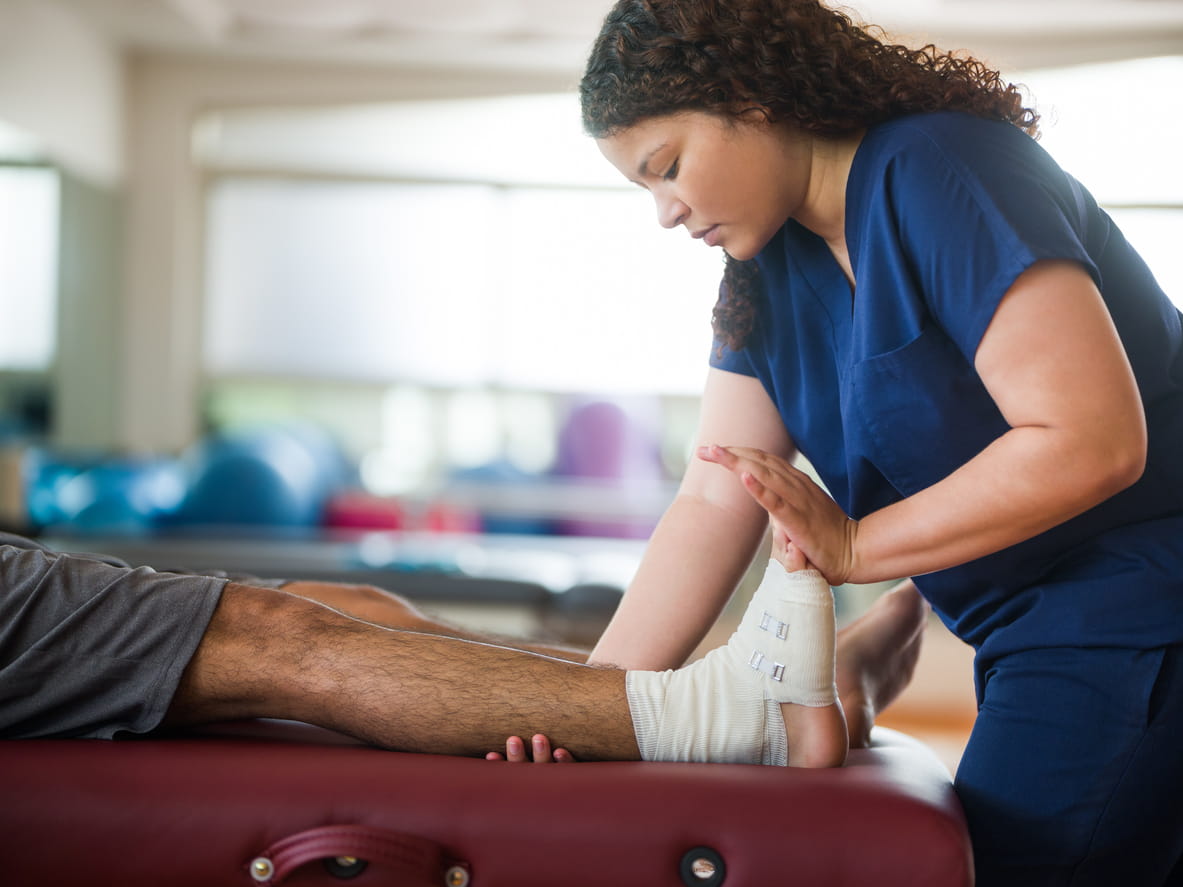
Non-surgical treatment protects the fracture while it heals in the correct position. It typically involves:
Non-surgical does not mean unsupervised. Follow-up assessment and imaging are important to confirm that the fracture remains appropriately aligned and is healing as expected.
The standard operation is open reduction and internal fixation. Reduction means returning the bones to their correct position; fixation means holding them there while they heal.
Plates and screws are often left in place after the fracture has healed, although removal may be considered in selected cases if clinically indicated. Ankle fracture surgery sits within the foot and ankle subspecialty of Sheikh Sultan bin Zayed Hospital’s Orthopedics Clinic, which also manages orthopaedic trauma.
Bone typically takes around six to eight weeks to unite, though this varies with the fracture and the individual. That figure is often misunderstood, because bone healing and functional recovery are not the same milestone.
Union means the bone is solid enough to bear load. Functional recovery means the ankle moves, feels stable and tolerates normal activity, and that commonly takes three to six months. Return to running or sport can take longer, particularly after a complex or surgically treated fracture.
Factors that influence recovery include:
Follow-up appointments exist to confirm the bone is healing in position. Attending scheduled follow-up appointments is important so that healing and alignment can be monitored and any concerns identified early.
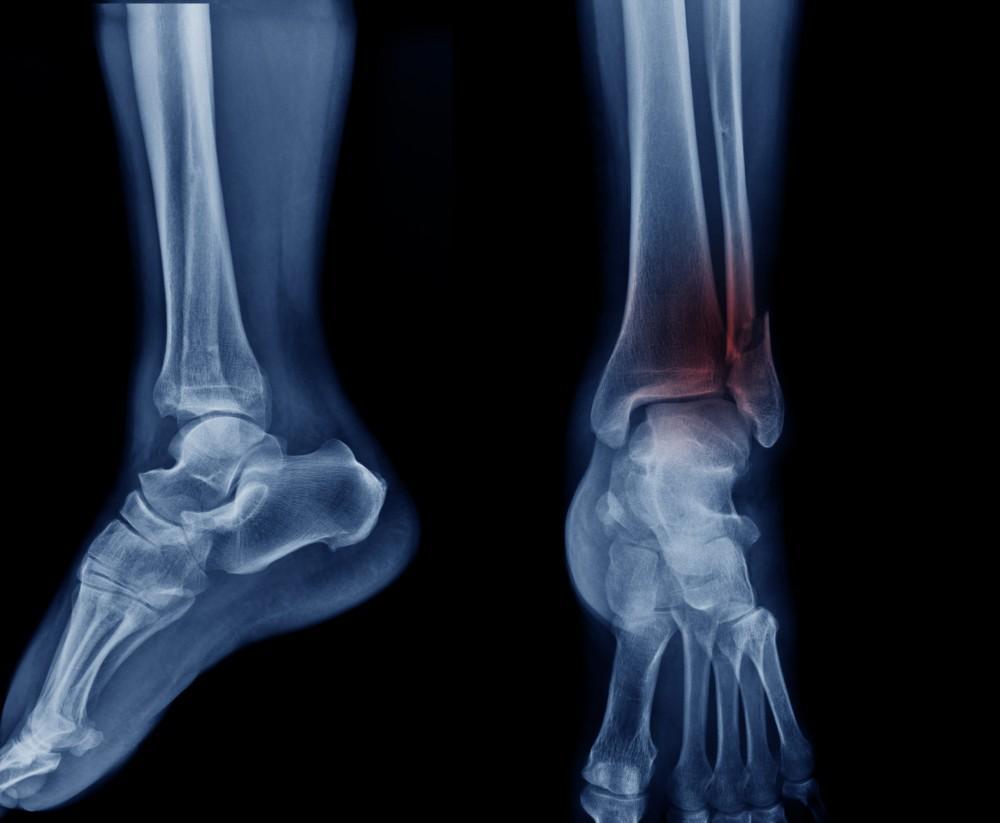
There is no universal answer, and any timeline you find online may not apply to your fracture. Weight-bearing depends on which bones are broken, whether the fracture is stable, whether it was fixed surgically and how healing progresses on your X-rays.
The general pattern is:
Follow your own surgeon’s instructions rather than a general timeline. Weight-bearing should progress according to your treating team's instructions, as both the timing and amount of loading depend on the fracture and how it is healing. The right moment is a clinical judgement based on your imaging.
Physiotherapy is commonly recommended, particularly after prolonged immobilisation, surgery or where stiffness, weakness, balance problems or difficulty walking persist. Several weeks of immobilisation leave the ankle stiff, the calf and foot muscles weakened, and balance impaired. Rehabilitation can help address these changes and support a safe return to normal movement and activity.
Rehabilitation addresses:
Gentle movement often begins during the protected phase, with structured rehabilitation starting once the surgeon confirms the fracture is stable enough. Physiotherapy and Rehabilitation at Sheikh Sultan bin Zayed Hospital is delivered in one of the comprehensive in-house physiotherapy centre in Sharjah, on the same site as the orthopaedic team.
Most ankle fractures heal well when diagnosed accurately, treated appropriately and followed up. Where that does not happen, recognised complications include:
This is the reason accuracy matters early. Accurate diagnosis, appropriate treatment and follow-up can help reduce the risk of complications such as malunion.
Seek emergency care immediately if you have any of the following:
A deformed ankle should not be straightened by anyone other than a clinician, and an open fracture requires urgent treatment to reduce the risk of infection. Numbness or a cold, pale foot suggests the nerve or blood supply may be compromised and is time-critical.
If you have injured your ankle and cannot bear weight, have tenderness over the bone or have significant swelling, have it assessed rather than waiting to see whether it settles. Assessment involves a clinical examination and, where appropriate, imaging to confirm whether the ankle is fractured and whether it is stable. Treatment may then involve a cast or boot, surgery to restore alignment, or rehabilitation, depending on what is found.
The foot and ankle team within Sheikh Sultan bin Zayed Hospital’s Orthopaedics Clinic manages ankle fractures and orthopaedic trauma, with diagnostic imaging and physiotherapy and rehabilitation on the same site. View our orthopaedic consultants, check insurance coverage or request an appointment online. Call 800 642 to speak to the team.
This article is intended for general information only and does not constitute medical advice. It is not a substitute for an individual assessment by a qualified healthcare professional. If you have injured your ankle or have concerns about your symptoms, seek medical assessment. In an emergency, attend the nearest emergency department or call the emergency services.
Medically reviewed by: Dr. Osama Gharsaa, Consultant, Orthopedic Surgeon, Sheikh Sultan Bin Zayed Hospital
Qualifications: Fellow of the Royal College of Physicians and Surgeons of Canada, Member of the American Academy of Orthopaedic Surgeons
Don’t wait, early diagnosis can make a life-changing difference. Book your appointment today and get the expert care you deserve.
You often cannot tell without an examination and an X-ray, as symptoms overlap considerably. A fracture is more likely with tenderness directly over the ankle bones, inability to bear weight, rapid extensive swelling or visible deformity. A popping sound at the time of injury does not distinguish between the two.
Sometimes, particularly with a stable single-bone fracture. Being able to walk does not rule out a fracture, and being able to walk does not rule out a fracture. If you have significant swelling or tenderness directly over the ankle bones after an injury, consider medical assessment. If you have bony tenderness and significant swelling after a twisting injury, get it assessed.
No. Stable, well-aligned fractures are commonly treated with a cast or boot and close follow-up. Surgery is considered when the fracture is displaced or unstable, involves the joint surface, affects more than one bone, or is open.
Bone typically unites in around six to eight weeks, but full functional recovery usually takes three to six months and sometimes longer. Healing time depends on the fracture type, whether surgery was needed, your general health and how closely rehabilitation is followed.
This varies too much for a general answer. Weight-bearing progresses in stages, from protected or partial weight-bearing to full weight-bearing in a boot and then normal footwear, guided by your follow-up X-rays. A limp early on is common and usually resolves with rehabilitation.
Weight-bearing restrictions after surgery are usually stricter at first, and your surgeon sets them based on the fixation and the fracture pattern. Progression follows confirmation on imaging that the fracture is healing in position rather than a fixed number of weeks.
It may be recommended. Physiotherapy can be particularly helpful after immobilisation or surgery, or when stiffness, weakness, balance problems or difficulty walking persist. Rehabilitation restores movement, strength, balance and normal walking, and reduces the risk of ongoing stiffness and re-injury.
The bone may heal in the wrong position or fail to heal at all, which can cause persistent pain, stiffness, instability, difficulty walking and post-traumatic arthritis later. Correcting a malunion afterwards is considerably harder than achieving correct alignment at the outset.
Conveniently located in Al Batayeh, Sharjah, Sheikh Sultan bin Zayed Hospital is easily accessible and serves communities across the Northern Emirates.
We are committed to providing world-class care to every patient we serve.
We welcome your feedback! Please let us know if you have any compliments, suggestions or concerns about our services.
Please contact us if you have any questions or would like more information.


