
Media Center
Blogs
Knee pain that no longer settles with rest, difficulty climbing stairs, or nights disrupted by an aching joint can lead many people to start wondering whether they need a knee replacement.
Having knee arthritis does not mean you need a knee replacement. The decision follows a sequence: establishing the diagnosis, trying appropriate non-surgical treatment, assessing how much the knee is affecting your life, and only then considering surgery. Depending on where the damage sits, replacement may involve the whole knee or only one part of it.
Knee replacement, also called knee arthroplasty, is an operation to resurface a knee joint that has been damaged by arthritis or injury. The worn joint surfaces are removed and replaced with artificial components that recreate a smooth surface for the joint to move on.
The purpose is to reduce pain, improve movement, restore function and improve quality of life. For people whose walking distance, sleep and independence have been significantly affected.
For appropriately selected patients whose walking, sleep or independence have been significantly affected, knee replacement can provide substantial improvement in pain and everyday function.
It can be total, replacing the surfaces of the main compartments of the knee, or partial, replacing only the affected part. What it does not do is make the knee normal again. Most patients experience a substantial reduction in pain and a real improvement in function, but a replaced knee behaves differently from a healthy natural one, and that expectation should be set before surgery rather than discovered after it.
Knee replacement is generally considered when there is significant joint damage and symptoms substantially affect daily life. The most common underlying causes are:
The decision rests on symptoms, functional limitation, physical examination and imaging together. There is no single age at which someone automatically becomes a candidate for knee replacement, and an X-ray finding alone does not determine whether surgery is required. Plenty of people have severe-looking X-rays and manage well, while others have moderate changes and are significantly disabled by them.
Surgery is also generally considered only after appropriate non-surgical options have been tried and have not provided enough relief. AAOS guidance supports considering surgical treatment when non-operative treatment no longer provides adequate relief and pain and difficulty with daily activities persist.
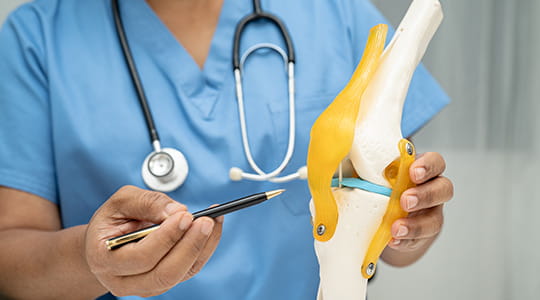
The following symptoms are the ones that should prompt an orthopaedic assessment:
These symptoms do not automatically mean you need surgery. They mean the knee warrants proper assessment. Several of them have causes other than advanced arthritis, and some respond well to treatment that has not yet been tried.
Not necessarily. Many people with knee osteoarthritis manage their symptoms for years without needing a knee replacement.
Non-surgical management works for a large proportion of patients and includes:
Surgery becomes a consideration when symptoms remain significant despite this and are substantially affecting quality of life: your walking distance, your sleep, your work, your independence. The threshold is about impact on your life rather than about a stage of arthritis on a scan.
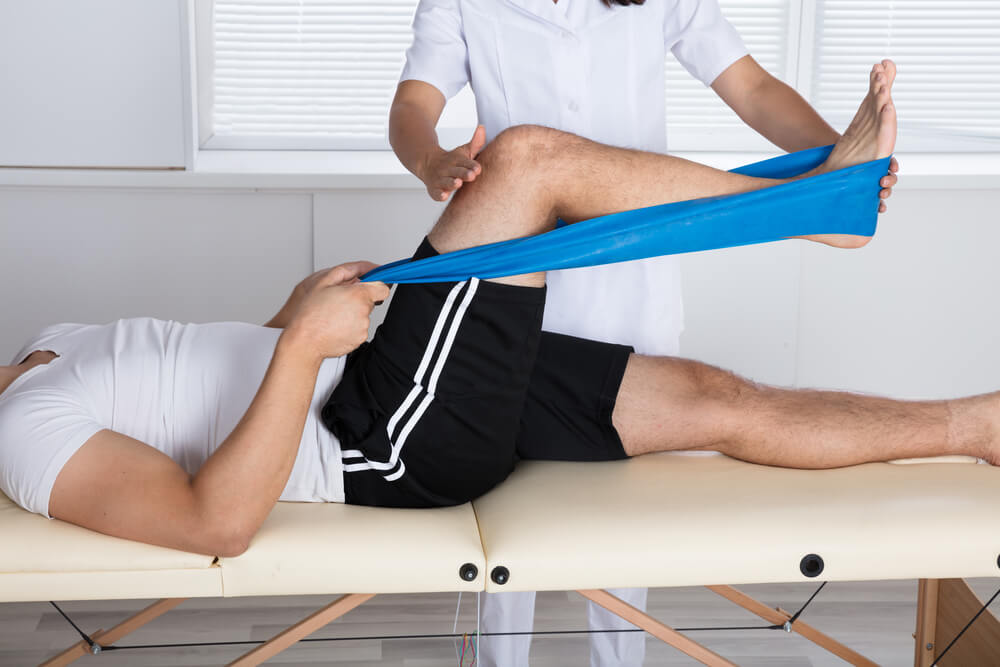
Strengthening the muscles around the knee, particularly the quadriceps, reduces load on the joint and improves function. Maintaining mobility can also help reduce stiffness and support everyday movement. Physiotherapy and rehabilitation is a core treatment rather than a holding measure.
Where excess weight is a factor, reducing it lowers the load passing through the knee with every step and supports general health before any potential surgery. This applies where it is relevant. Knee arthritis occurs across all body weights, and injury, inflammatory disease and previous surgery all cause it independently.
Pain-relieving and anti-inflammatory medicines can be used where appropriate. Choice depends on your other health conditions, kidney and stomach health and what else you take, so it should be discussed rather than assumed.
Injections may be considered for selected patients, generally to reduce symptoms for a period. Their suitability and expected benefit vary between patients. Injections should generally be viewed as part of an overall treatment plan rather than a way of reversing existing joint damage.
Adjusting the specific activities that reliably aggravate the knee helps, while maintaining general movement. Prolonged inactivity weakens the muscles that protect the joint and usually makes both pain and function worse.
An orthopaedic specialist weighs several things together:
An X-ray alone does not decide whether someone needs a knee replacement. Imaging shows the structural condition of the joint; it says nothing about how much that condition is affecting your life. Both sides of that picture are needed, which is why two patients with near-identical X-rays can receive different recommendations.
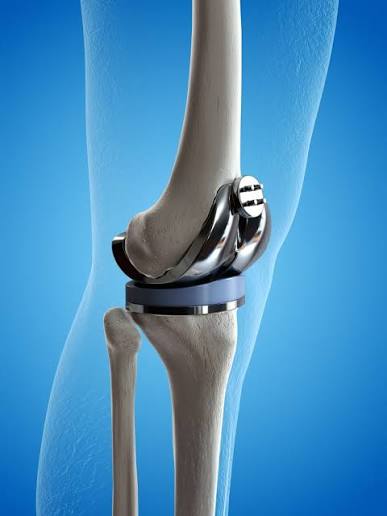
The damaged surfaces of the main compartments of the knee are replaced. It is the more common procedure and is generally used where arthritis affects the knee more widely, where there is significant deformity, or where the ligaments or other compartments are also affected.
Only the affected compartment is replaced, leaving the healthy parts of the knee and the ligaments intact. It may be appropriate when damage is genuinely limited to one part of the knee and other factors, including ligament condition and alignment, are favourable. Not every patient is suitable, and suitability is determined by examination and imaging rather than preference.
Neither is universally better. AAOS describes total and partial knee arthroplasty as options depending on whether damage affects the whole knee or is limited to a particular compartment. The appropriate procedure depends on where the damage sits and how extensive it is, the condition of the ligaments, the alignment of the leg, your activity level and other individual factors.
Preparation typically involves:
AAOS recommends discussing expected recovery, pain management, physical therapy and activity changes before joint replacement. Where diabetes or another condition needs optimising first, diabetes and endocrinology and internal medicine input forms part of the preparation.
The damaged surfaces of the joint are removed, and damaged joint surfaces are carefully removed and replaced with artificial components designed to allow smoother movement. Implants typically combine metal components on the ends of the bones with a plastic bearing surface between them, so the joint moves without the bone-on-bone contact that causes the pain.
The exact technique varies according to the patient, the pattern of damage, whether the procedure is total or partial, and the surgeon’s assessment. Anaesthesia may be general or regional and is discussed with the anaesthetist beforehand.
Joint replacement surgery is provided by the Orthopedic and Spine department at Sheikh Sultan bin Zayed Hospital, with anaesthesia and pain management input throughout.
Pain is expected and is actively managed. Patients are usually helped out of bed and begin moving early, walking short distances with a frame or crutches, and rehabilitation starts almost immediately. Early movement reduces the risk of complications and stiffness.
Walking distance increases gradually and physiotherapy continues, working on knee movement, strength and normal walking pattern. Swelling and discomfort are common during this period and are part of the expected course rather than a sign of a problem.
Strengthening continues, endurance improves and normal activities are resumed progressively. The pace varies considerably between individuals depending on the state of the knee beforehand, general health and how consistently rehabilitation is followed.
Being able to walk soon after surgery does not mean the knee is fully recovered. AAOS notes that patients commonly begin walking with assistance early after joint replacement, while recovery and return to routine activities continue over the following weeks and months. Early mobility is a starting point, not a finish line.
Modern knee replacements commonly last many years, and most patients get long-term benefit from them. Longevity varies between individuals and is influenced by activity level and the loads placed on the joint, body weight, implant characteristics and general health.
No implant comes with a guaranteed lifespan, and any specific number quoted for an individual is an estimate rather than a promise. Revision surgery, replacing or revising the implant, may be needed in the future, particularly in younger and more active patients whose implants are subject to more years of loading.
Knee replacement is a common and generally successful operation, but like any major surgery it carries risks. These include:
Your surgeon assesses individual risk factors before surgery and takes specific measures to reduce them. AAOS notes that factors such as diabetes, higher BMI and smoking can influence surgical risk and outcomes, which is why optimising health before the operation is part of the preparation rather than an afterthought.
Arrange an assessment if:
Seeing an orthopaedic specialist does not mean you will automatically be advised to have surgery. The purpose of the assessment is to determine what is causing the symptoms and identify the most appropriate treatment, which for many patients is a better-structured non-surgical plan.
Knee replacement is a major treatment option, not automatically the first one. An orthopaedic assessment determines whether your symptoms are caused by advanced joint damage and whether non-surgical treatment still has more to offer.
The Orthopedic and Spine department at Sheikh Sultan bin Zayed Hospital provides knee assessment, joint replacement surgery and rehabilitation support afterwards, with radiology and diagnostic services on site. Located in Al Batayeh and serving communities across the Northern Emirates. Call 800 642 or book an appointment online. You can also view our doctors and medical staff or check insurance coverage.
This article is intended for general information only and does not constitute medical advice. It is not a substitute for an individual assessment by a qualified healthcare professional. Decisions about knee replacement surgery should be made with an orthopaedic specialist who has examined your knee and reviewed your imaging and medical history.
Medically reviewed by: Dr. Osama Gharsaa, Consultant, Orthopedic Surgeon, Sheikh Sultan Bin Zayed Hospital
Qualifications: Fellow of the Royal College of Physicians and Surgeons of Canada, Member of the American Academy of Orthopaedic Surgeons
Don’t wait, early diagnosis can make a life-changing difference. Book your appointment today and get the expert care you deserve.
There is no single correct age. The decision is based on symptoms, the extent of joint damage, how much function is limited, general health and quality of life. Younger patients may be advised to delay where possible, since a longer life expectancy makes future revision surgery more likely.
There is no fixed threshold on a scan. Symptoms and functional limitation matter alongside imaging. Significant changes on an X-ray do not necessarily mean surgery is required if symptoms remain manageable.
Many people manage knee arthritis for years with exercise, weight management where relevant, medication and activity modification, and never need surgery. Advanced joint damage with symptoms that no longer respond to these measures may eventually require it.
Pain is expected after surgery and is actively managed with a planned pain relief regimen. Discomfort typically changes in character as recovery progresses, shifting from post-operative pain in the first days to the aching and stiffness of rehabilitation over the following weeks.
Many patients begin walking with assistance early after surgery, often within the first day, using a frame or crutches. The exact timing depends on your individual situation and your surgical team’s instructions.
Early mobility comes quickly, but full functional recovery takes considerably longer, typically months rather than weeks. Strength, endurance and confidence continue improving well after you are walking comfortably.
Some people find kneeling uncomfortable after knee replacement and may continue to avoid it even after recovery. If kneeling matters for your work or prayer, raise it during rehabilitation so it can be addressed specifically.
Many patients return to low-impact activities such as walking, swimming, cycling and golf. Higher-impact activities may place greater stress on the implant and may not be recommended. Your surgeon or physiotherapist can advise you based on your individual recovery and circumstances.
Conveniently located in Al Batayeh, Sharjah, Sheikh Sultan bin Zayed Hospital is easily accessible and serves communities across the Northern Emirates.
We are committed to providing world-class care to every patient we serve.
We welcome your feedback! Please let us know if you have any compliments, suggestions or concerns about our services.
Please contact us if you have any questions or would like more information.


